
Navjot Sawhney: From Dyson to 10 Downing Street with the Washing Machine Project
"If it feels slightly uncomfortable or slightly away from the norm, lean into it. That's where your resolve will come."
"Don't be wedded to the solution. Be in love with the problem."
"Small actions have big impact potential."
"Find the thing that frustrates you, or find the thing that keeps you up at night. Find the thing that you've fallen in love with, because that's the thing that will keep you going."
Navjot Sawhney shares his journey from a successful engineering career at Dyson to founding The Washing Machine Project, a humanitarian social enterprise empowering women in low-income communities, and how becoming "Enemy #1" changed his perspective on purpose, uncertainty, and social impact.
What you'll learn
- How to find your purpose in frustration and personal experience
- The value of leaning into uncertainty as a social entrepreneur
- Lessons learned in entrepreneurship from the Washing Machine Project
- The role of empathy and community support in driving change
- How to maintain mental health while sustaining social impact work
Key moments from the conversation
From Dyson to humanitarian social enterprise
Navjot traces his transition from a successful engineering career at Dyson to founding The Washing Machine Project, a humanitarian organisation aimed at empowering women in low-income communities through innovative washing solutions. Three years into his career at Dyson, he realised he was making vacuum cleaners for rich people when he wanted to make something that moved the needle for humanity. Leaving was the loneliest decision of his life, everyone around him thought he was making a mistake, but leaning into that discomfort became the pattern that defined his entire journey.
The inspiration behind the Washing Machine Project: Divya
In October 2016, Navjot was living in a village in South India working for a cook stove company. His next-door neighbour Divya spent up to 20 hours a week hand-washing clothes on her knees, back-breaking, skin-damaging work. When Nav offered to buy her an electric washing machine, she pointed out she had no generator and no running water. That moment, 'the penny dropped', became the founding story of the project. In October 2023, after a seven-year promise, Navjot returned to gift Divya one of the machines she had inspired. As he left, she told him: 'You've made an impact on my life, but there are millions of women just like me. Go find them.'
Recognition from 10 Downing Street, and staying grounded
The Washing Machine Project has received significant recognition, including an invitation to a lunch at 10 Downing Street during the King's Coronation. Navjot brought his mother, who had just retired after 40 years of government service. When Prime Minister Rishi Sunak told her she should be proud of her son, she replied, 'Yeah, yeah, but I'm really proud of you.' Nav stays grounded by keeping around him friends who were there before the project and who care about his happiness, not his accolades, and by centering every decision on Divya and the 50,000 people the machines have already reached.
Becoming Enemy #1: the personal cost of disruption
When Navjot quit Dyson to volunteer unpaid for Engineers Without Borders, his family said he had lost his marbles. His mother told him to get it out of his system and come back. He was Enemy Number One. His lesson: entrepreneurship requires accepting loneliness at the point of decision, and de-risking wherever possible, he later took a job at Jaguar Land Rover to pay his bills while building the project, which he describes as one of the best decisions he made.
The first prototype and Oxfam's fund: leaning into uncertainty
The first Divya Washing Machine prototype was built in two days with a friend from Dyson, tested with 79 families in Iraq. Oxfam saw the report and offered to fund 50 more machines. Everyone around Navjot said not to take the money, they had only a prototype. He leaned in and said yes. That pattern of leaning into hesitancy and uncertainty, of accepting risk over analysis paralysis, became the defining entrepreneurial habit of The Washing Machine Project.
Leadership lessons: fall in love with the problem
Nav's three founding principles for building something meaningful: fall in love with the problem, not the solution, because the solution will always change but the problem stays the same; find people who are equally as passionate about that problem; and build a network of partners who are incentivised by your success because it is their success. He credits his team at JLR, who supported his prototype testing in refugee camps and cheered him on, as the community that made the project possible.
Frequently asked questions
What is The Washing Machine Project?
The Washing Machine Project is a humanitarian social enterprise founded by Navjot Sawhney that empowers women in low-income communities through innovative, affordable, human-powered, flat-packed washing machines. Since 2019, it has reached nearly 50,000 people worldwide and is targeting 1 million by 2030.
Who is Divya and why is she important to The Washing Machine Project?
Divya was Navjot's next-door neighbour in South India in 2016, spending up to 20 hours a week hand-washing clothes. Her practical challenge, no generator, no running water, sparked the invention. After a seven-year promise, Navjot returned to gift her one of the machines she inspired. Her parting words, 'There are millions of women just like me. Go find them', remain the mission statement.
How did Navjot Sawhney transition from Dyson to social entrepreneurship?
Navjot was inspired by personal experiences and family background, his father's displacement during the Indian Partition, his mother raising three children after his father died when he was eight, to transition from his engineering career at Dyson to founding The Washing Machine Project. He volunteered for Engineers Without Borders in India before starting the project.
Why is Navjot called 'Enemy #1' in the episode title?
When Navjot quit his well-paid engineering job at Dyson to volunteer unpaid for Engineers Without Borders, his family thought he had made the biggest mistake of his life. He was Enemy Number One. He shares how leaning into that discomfort and ignoring consensus became the defining entrepreneurial habit of his entire journey.
What does Nav recommend for daily mental health?
Nav meditates every single day, ten minutes each morning for clarity of thought, and journals consistently to document his journey and reflect on progress. He describes both as non-negotiables: without them, he would not be able to navigate the demands of leading a social enterprise.
Who is Navjot Sawhney?
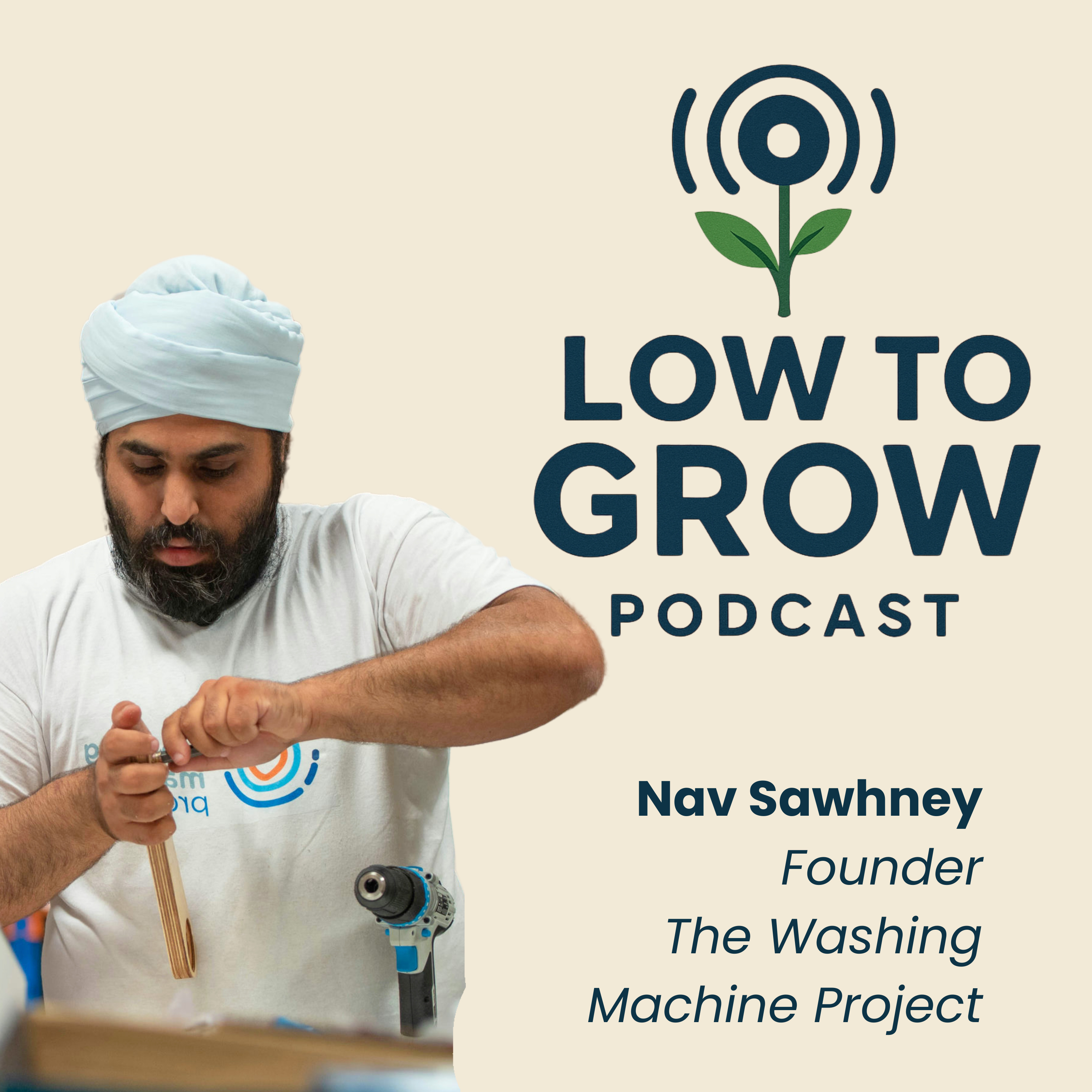
Navjot Sawhney
Founder · The Washing Machine Project
Nav studied Aerospace Engineering at Queen Mary University in London. After working as an engineer for Dyson, Nav moved to South India to make cookstoves with Engineers Without Borders UK. It was here he met his neighbour Divya. Divya's struggle with everyday tasks, including hand washing clothes for up to 20 hrs a week, inspired Nav to find a solution. He promised her a washing machine, and he developed the first prototype when he returned home. This prototype would inspire Nav to start The Washing Machine Project in 2019, and call the machine, Divya. With an interest and now a promise, in 2019, Nav enrolled into a masters programme at University of Bath to study Humanitarianism, Conflict and Development. Since then, The Washing Machine Project has conducted ethnographic research in 13 countries and interviewed more than 3,000 families in Uganda, Kenya, Iraq, Jordan, Lebanon, Cameroon, Jamaica, Nepal, India and the Philippines to gain insight into their clothes washing tendencies. As well as successful pilots, The Washing Machine Project has now distributed Divya washing machines to families and communities in India, Iraq, Lebanon, United States, Mexico and Uganda, impacting almost 30,000 people. Implementation is tailored to meet the partnering regions' specific cultural, economic, and environmental conditions, ensuring the solution is effective and relevant in local contexts. Having partnered with organisations like RS Group, JLR, Santander and Meanwell, as well as international development and humanitarian organisations such as UNHCR, Save The Children, Oxfam, Care International and Plan International, The Washing Machine Project's plans are now to scale up across numerous countries, with support from the foundation arm of leading appliance manufacturer, Whirlpool. In March 2024, Nav returned to South India with Whirlpool Foundation to deliver machines to Divya, along with 10 neighbours and fulfil his promise. So far, The Washing Machine Project has been recognised for its work by receiving numerous awards within the engineering and humanitarian space, including the George H.W Bush Points of Light Award in 2023.
Continue listening
More episodes
2026-06-07
Eileen Wada Willett of East Asian Girl Gang: A Third Culture Take on Identity, Fashion and Community
Listen →
2026-05-24
Dhritiman Mitra Investment Banker and Political Strategist: Insights on Harnessing AI for India's Future
Listen →
2026-05-10