
AI and Healing-Centred Tech: Linda Hong Cheng Founder of Gossip Group on Digital Ageism
"I moved to the United States to live with my mother and her husband who were very abusive towards me. I nearly failed high school because of depression."
"My environment was deadly and would probably have completely crushed most people. But I think because of my particularly strong character I was able to get myself through it so that I had the willpower to use that environment to make myself stronger."
"The kinds of failures that people talk about on LinkedIn with startups or whatever, it just literally is nothing. It's not something that I would really ever wish on anybody because you pay a really steep price for this kind of strength."
"Being able to have true autonomy over your life is really the foundation for health and wellness in every sense of the word. And that true autonomy comes from feeling included in the spaces that you're in, in the tools that you're able to access and use."
"Healing-centred leadership means we are going to focus on what is actually healing for society, for our economy, for our markets, really focusing on purpose in what we're doing and being really intentional about how we're creating our technology."
Linda Hong Cheng, an Oxford DPhil researcher and BBC-featured entrepreneur, recounts escaping a violent household, nearly failing high school because of depression, and winning a Clarendon scholarship to Oxford, where her computational sociology research on digital gender gaps led her to found InfraJoy Labs, building age-inclusive AI infrastructure, and Gossip Group, a women-led angel syndicate.
What you'll learn
- Depression in high school does not determine your academic ceiling; with the right environment and support, a student who nearly failed high school can transfer to a top-ranked university and win three consecutive full scholarships.
- A sense of purpose, however abstract, can function as a survival mechanism through trauma; Linda credits it with carrying her through physical and emotional abuse.
- Women are 19% less likely to be able to access mobile internet than men globally, and the intersection of gender and age compounds this disadvantage over a woman's lifespan.
- Existing accessibility policies like the European Accessibility Act function as a checklist rather than a genuine design philosophy; true inclusivity requires co-design with end users from the start of the build process.
- In healthcare and government, age-inclusive digital platforms are not just about convenience, they can directly reduce preventable deaths by enabling older patients to book screening appointments and navigate care systems.
- The academic tradition of pointing out problems without solving them was a key frustration that pushed Linda from a professorship path into entrepreneurship and tech.
- Profit and purpose are not contradictory; older consumers are the fastest-growing and most financially powerful segment, making age-inclusive design a revenue opportunity as much as a social mission.
Key moments from the conversation
Escaping a violent household through scholarship
Linda grew up in an abusive household in the United States after spending early childhood with her grandmother in Beijing. Depression caused her to nearly fail high school. A self-taught Mandarin fluency, a relentless intellectual drive, and a series of full-ride scholarships. UNC Chapel Hill, Columbia, and finally Oxford's Clarendon, gave her the financial independence to cut ties with that environment for good.
Discovering computational sociology and Chinese NLP bias
At Columbia, Linda first-authored a paper on gender bias in government media attention to protests in China using Weibo data. She discovered that natural language processing algorithms require Chinese text to have artificial spaces inserted between words to function, a structural bias in favour of English-centric language, which led her to advocate for Chinese computational centering before it became a mainstream conversation.
Her grandmother's near-death and the founding of Mung!
During COVID, Linda's grandmother in China had kidney surgery and nearly did not survive the recovery because she could not navigate any digital platform to order groceries. This experience, combined with Linda's Oxford research on digital gender gaps, crystallised the decision to leave the academic track and found Mung!, a startup recognised by the BBC for redefining digital ageism.
InfraJoy Labs and the global standard for age inclusion
InfraJoy Labs is building what Linda describes as the first global standard for age-inclusive digital infrastructure, going beyond checklist accessibility policies to the code stack, logical flows, and design philosophy behind platforms. Pilots have already begun with health firms, where helping older patients navigate appointment-booking systems has direct implications for longevity and preventable mortality.
Healing-centred leadership in practice
Linda rejects the Silicon Valley "move fast and break things" model and defines healing-centred leadership as building technology that is genuinely joyful and purposeful for both builders and end users, being intentional about who enters collaborations and the cap table, and creating something that outlives the founders, a legacy rather than a hype cycle.
Frequently asked questions
What does InfraJoy Labs do?
InfraJoy Labs builds AI-native digital infrastructure that is age-inclusive and justice-driven. It works with development teams to embed older-user inclusivity from the code stack upwards, covering font sizes, logical navigation flows, and the overall philosophy of platform design, rather than retrofitting accessibility as an afterthought.
What is the digital gender gap?
Globally, women are 19% less likely than men to be able to access mobile internet. Linda's Oxford research adds that this gap is compounded by age, over the course of a woman's lifespan, the combination of gender and age creates a double marginalisation in digital access.
What is healing-centred leadership?
As Linda defines it, healing-centred leadership means building technology with genuine intentionality and purpose, not treating investments and users as game pieces, and ensuring that the process of building is itself fulfilling and healing for the founders, not just aimed at exit metrics.
What is Gossip Group?
Gossip Group is a women-led angel syndicate founded by Linda and others, focused on investing in the future of health, happiness, and humanity. Linda is a founding partner.
Who is Linda Hong Cheng?
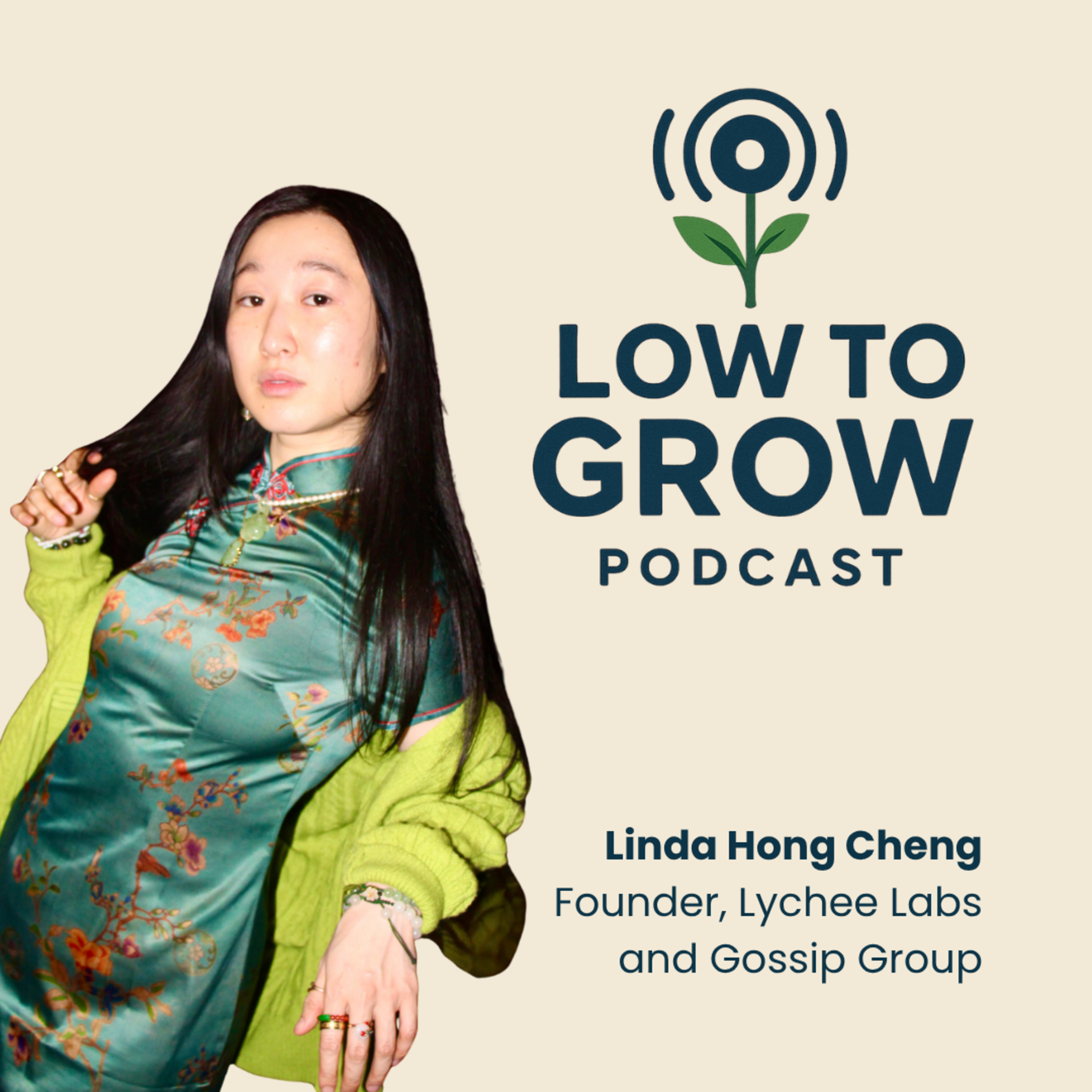
Linda Hong Cheng
Founder · InfraJoy Labs
Linda Hong Cheng is a BBC-featured entrepreneur, Oxford DPhil researcher in computational sociology, and the founder of InfraJoy Labs, which is building the first global standard for age-inclusive digital infrastructure. She is also a founding partner of Gossip Group, a women-led angel syndicate focused on health, happiness, and humanity. Her previous startup Mung! was recognised by the BBC for addressing digital ageism. Linda was born in the US, spent early childhood in Beijing, and moved through multiple US cities before winning full-ride scholarships to UNC Chapel Hill, Columbia, and Oxford.
Continue listening
More episodes
2026-06-07
Eileen Wada Willett of East Asian Girl Gang: A Third Culture Take on Identity, Fashion and Community
Listen →
2026-05-24
Dhritiman Mitra Investment Banker and Political Strategist: Insights on Harnessing AI for India's Future
Listen →
2026-05-10