
Elisa Durney on Building Girls in Quantum into a Global STEM Movement before turning 19
"I don't really like the word of proving people wrong, to share that instead of those prejudices or like those perhaps conceived notions that they might have are different and that instead we can empower other students that are from Latin America, that are from different backgrounds, that are women."
"The way that I think Girls in Quantum has been successful is because of perseverance and the way of just being a spam sometimes. We've been sending so many emails, so many messages, and that's like constant trial and error."
"Once you understand your curiosity and that you really want to do something, then there's nothing that can stop you."
"A career won't define your whole life. It will just be the start of something and you can shape your career in a way that will help you to achieve all your goals."
"Every single challenge adds to a toolkit of defence. Like a hat or I don't know, like an equipment, like a shield somehow that is powerful and stronger."
Elisa Torres-Durney, a 19-year-old Chilean founder, recounts how a pandemic-era online course ignited her passion for quantum computing, how she built Girls in Quantum from a small group chat into a movement reaching 7,000 students across 27 countries, and how she navigated language barriers, imposter syndrome, and a scholarship path to study in the United States.
What you'll learn
- An online quantum computing course discovered during the COVID-19 pandemic, with no prior background in the field, can be the catalyst for a global educational movement.
- Language barriers and imposter syndrome in a highly technical field are surmountable through collaboration and persistent curiosity rather than innate skill.
- Building a volunteer network first, then introducing a clear deliverable such as an inter-school magazine, is a practical way to maintain community engagement over time.
- Reaching out persistently, hundreds of emails with most receiving no reply, is a repeatable strategy for building partnerships and expanding a network without existing connections.
- Delegating and communicating capacity limits within a team is essential for balancing a university workload, a global organisation, and personal wellbeing.
- Comparing your journey to others' is a constant trap; recognising your own uniqueness is foundational to sustainable social entrepreneurship.
- Writing down your motivations, reflecting in a journal, and taking deliberate breaks before big decisions protects mental health under pressure.
Key moments from the conversation
A Barbie microscope and a lifelong curiosity
Elisa traces her scientific curiosity to a tiny toy microscope she had at age two, which set a habit of questioning, exploring, and seeking to understand how nature works. That disposition ultimately led her to quantum computing and to building GiQ.
Discovering quantum computing by accident
At 15 or 16, during the pandemic, Elisa stumbled across an introduction to quantum computing course online and applied on the basis of having nothing to lose. Winning a year-long scholarship and finding herself among students who seemed to have an innate grasp of the subject triggered both imposter syndrome and a determination not to quit.
The magazine pivot that scaled the network
Girls in Quantum began as a loose network of students discussing social issues. When engagement stalled, Elisa introduced an inter-school magazine, a simple idea executed at scale, giving schools an exchange of value and growing the contributor base from five schools to sixty.
Winning a US university scholarship from a small Chilean city
With no teacher guidance and no precedent in her community for undergraduate study in the United States, Elisa navigated the application process alone, won an Education USA scholarship, and left home for the first time as an only child. The first month was marked by homesickness, culture shock, and self-questioning before she found her footing.
Told she was too young and too Latin American
Critics questioned why a teenager without a PhD was working in quantum, told her she should return to school, and suggested Latin Americans had no place in the field for a reason. Elisa chose to see these moments as opportunities to prove that the field belongs to anyone with curiosity and determination.
Frequently asked questions
What is Girls in Quantum and what does it do?
Girls in Quantum (GiQ) is a youth-led initiative founded by Elisa Torres-Durney that provides free quantum-technology education, including workshops, resources, and mentoring, to students across more than 27 countries, with a particular focus on including girls and underrepresented groups.
How old was Elisa when she started Girls in Quantum?
Elisa was 15 or 16 years old when she first learned about quantum computing through an online scholarship programme and began messaging peers to create what became Girls in Quantum.
How did Elisa Torres-Durney get a university scholarship in the United States?
She applied for scholarships in Chile including one from Education USA through the American embassy. Her teachers had no experience with the process, so she navigated it herself and was eventually accepted by both Canadian and US universities.
What advice does Elisa give to students choosing a university subject?
She advises reaching out directly to people already working in the field you are curious about, asking as many questions as possible, and recognising that a career is a starting point rather than a fixed identity, there are many paths to any goal.
Who is Elisa Torres-Durney?
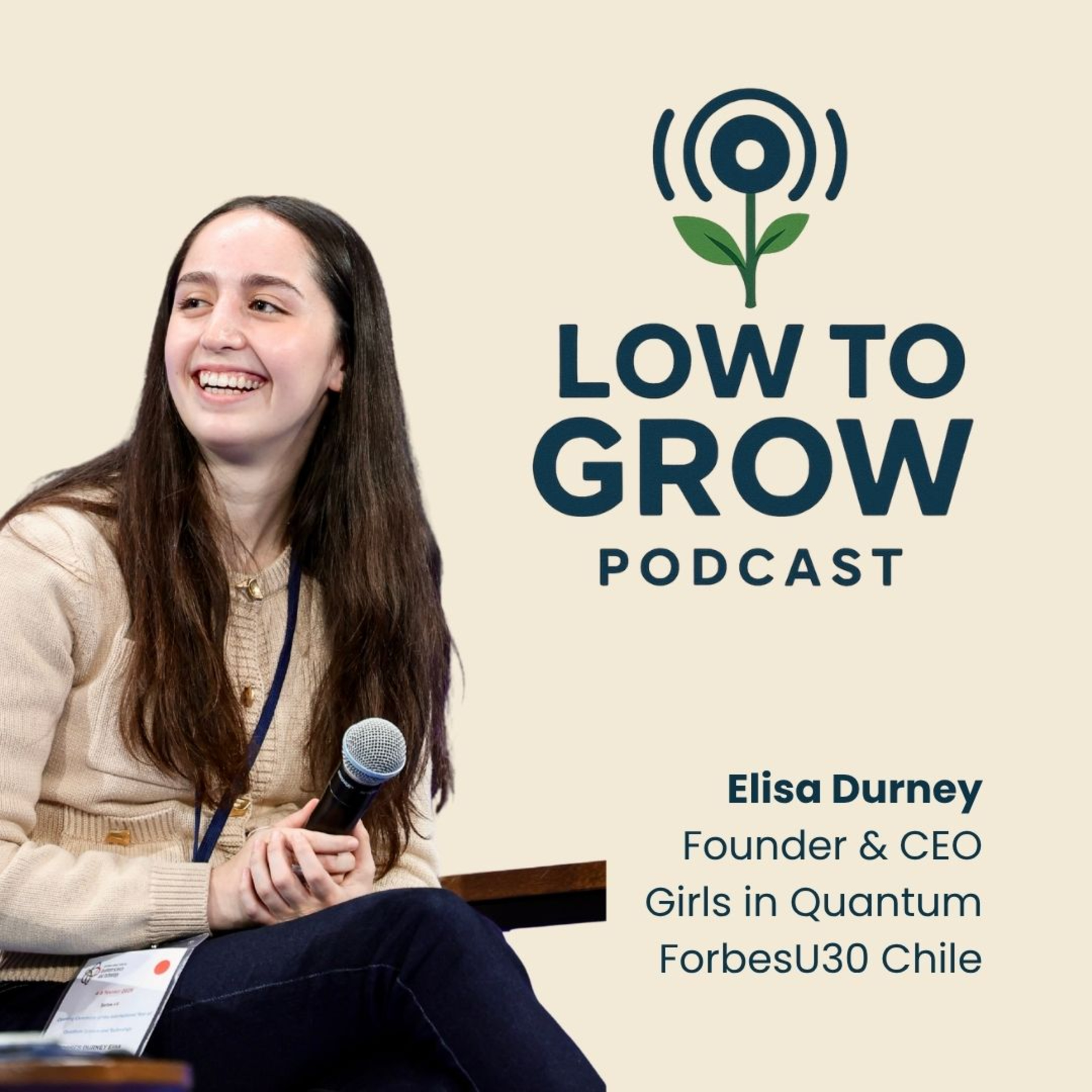
Elisa Torres-Durney
Founder · Girls in Quantum (GiQ)
Elisa Torres Durney, a 19-year-old Chilean student, is the founder of Girls in Quantum, an organization dedicated to making quantum computing education accessible. The initiative has built a global network of ambassadors, reaching over 7K students in 27+ countries through free educational resources, workshops, and mentoring programs. Recognized as one of Forbes 30 under 30, Forbes Chile's 30 Most Powerful Women and a top 10 finalist for the Global Student Prize, Elisa is committed to advancing gender diversity in STEM and quantum computing. She collaborates with organizations such as UN Women, Inspiring Girls, and G100: Mission Million. Elisa has also spoken at international events organized by companies including The Lancet, The Economist, TEDx, Women Economic Forum, EY, and the InterAmerican Commission on Science and Technology.
Continue listening
More episodes

2026-06-07
Eileen Wada Willett of East Asian Girl Gang: A Third Culture Take on Identity, Fashion and Community
Listen →
2026-05-24
Dhritiman Mitra Investment Banker and Political Strategist: Insights on Harnessing AI for India's Future
Listen →
2026-05-10