
WCorp: Geeta Sidhu-Robb on Women-Safe Workplaces and Self-Made Power
"I decided that I was gonna sell my mind. My mind needed resilience to be able to be sold on a day-to-day basis. I needed to believe in myself and I wanted to become the most powerful person that I could become."
"Don't be poor. And I know it sounds stupid. Don't be poor. Make sure you have enough money put by for you, by you, with you that you can do what it is that you need as much as you possibly can. Because having autonomy over your own choices is the biggest thing that you can do."
"Get out of my way and let me work. But my biology must come to work. We cannot bring our biology to work. We have to pretend we're men. We have to pretend all the things that happen to us don't happen."
"Power for me means the freedom to choose. My inside and my outside are very aligned. I'm always like this. I like this if you're on camera and I'm like this if you're in my house. I'm never gonna be anybody different."
"The thing that gives you the best mental health, it's don't suppress what you're scared of. Whatever you resist will persist. If you go through life managing these emotions, you're screwed."
Geeta Sidhu-Robb, five-time entrepreneur and founder of WCorp, shares how a firing after her child's hospitalisation left her a single mother with 2,000 pounds and three small children to support, how sheer financial necessity drove her to create Nosh Detox, accidentally build a top-tier coaching practice with clients including Simon Cowell and Gwyneth Paltrow, and ultimately launch WCorp to certify workplaces that are structurally safe and productive for women.
What you'll learn
- Financial necessity, not a business plan, can be the forcing function for entrepreneurial innovation; Nosh Detox was founded with a 2,000-pound overdraft and six weeks before the money would run out.
- Revenue-first thinking, selling whatever sells, then iterating, is a legitimate startup strategy when capital and time are both constrained.
- Coaching clients are rarely fully ready to change; a "stupid tax", a financial penalty for not doing assigned homework, can be an effective accountability mechanism even with high-net-worth clients.
- A coach is most valuable when they follow the person rather than a system; the right coach is interested in you specifically, not in delivering a pre-packaged programme.
- The difference between self-confidence (external competence) and self-esteem (internal sense of worth) is the gap that most successful people still struggle to close, and where the most impactful coaching work happens.
- Women's biological needs, menstruation, perimenopause, caregiving responsibilities, are not luxury accommodations; building workplaces that treat these as baseline infrastructure rather than perks is both fairer and more profitable.
- Suppressing difficult emotions has a physiological cost; allowing yourself to feel bad, process it briefly, and move on is healthier than either suppression or extended wallowing.
Key moments from the conversation
Fired after spending nights on a hospital floor
When her first child was seriously ill, Geeta spent nights sleeping on the floor beside his hospital bed and came home too exhausted to work. In the early 2000s there were no provisions for this; she lost her corporate law job. The firing left her a single mother with three children under seven and no income, which became the origin story of everything she built next.
Nosh Detox: necessity as the mother of invention
With 2,000 pounds and six weeks before insolvency, Geeta built Nosh Detox by selling whatever sold, then refining it. Night delivery happened because the driver had a day job and was cheaper after dark. Cold-pressed juices happened because boiled juices tasted terrible and she refused to sell them. Coca-Cola and Unilever executives eventually sat in her front room in their socks, shoes off because she is Asian, asking how she invented her products.
Accidentally building an elite coaching practice
A very wealthy American client arrived at Nosh Detox wanting a juice fast that Geeta refused to provide on health grounds. The client paid 250 pounds an hour to hear Geeta's opinions instead. That referral network grew to include Simon Cowell, Gwyneth Paltrow, two Spice Girls, royals, presidents, and CEOs, none of whom Geeta had sought out; they came because of word of mouth.
The stupid tax and the non-compliant billionaire
Geeta includes a "stupid tax" clause in some contracts for clients who are so accustomed to deference that they resist advice. One client, an Australian man who had never been told what to do by a woman, let alone a South Asian woman, had to bring rice-filled beanbags to sessions for her to throw at him when he ignored her recommendations.
WCorp and biologically compatible workplaces
WCorp's core argument is that a man's workplace and a woman's workplace can coexist under the same roof, as male and female washrooms do, without conflict. The initiative certifies organisations that have built infrastructure accommodating biological realities: periods, perimenopause, caregiving. Its ROI Genie tool quantifies in revenue terms what diversity of thought delivers, shifting the conversation from HR to the chief revenue officer.
Frequently asked questions
What is WCorp and what does it certify?
WCorp certifies workplaces as genuinely safe and productive for women by assessing whether the organisation's infrastructure, policies, physical environment, and working norms, accommodates women's biological realities rather than requiring them to mask or suppress those needs. It also runs the ROI Genie, which quantifies the revenue uplift from diversity of thought.
How did Geeta Sidhu-Robb start Nosh Detox?
She started it with a 2,000-pound overdraft in January 2008, six weeks before that money would run out. She had no business plan. She sold whatever generated cash, refined what worked, and let market demand determine the product range, eventually pioneering cold-pressed juices and high-street IV drips in the UK.
How is coaching different from therapy according to Geeta Sidhu-Robb?
Geeta describes coaching as more direct and performative, it is focused on moving you through a process toward a goal, asking you to do specific things and holding you accountable. Therapy tends to explore the reasons behind feelings and takes more time to process the past.
How should someone choose a coach?
Geeta says the coach should follow you, not their system, they should be interested in who you are and what your problem is, not in delivering a pre-packaged programme. You should also like them, because you are going to share private things with them, and if you do not enjoy the relationship you will not be honest.
What does Geeta Sidhu-Robb say is the single most important thing for better mental health?
Do not suppress what you are scared of. Whatever you resist will persist. She also highlights nutrition, unprocessed food directly affects how you think, and daily movement as the other two foundations.
Who is Geeta Sidhu-Robb?
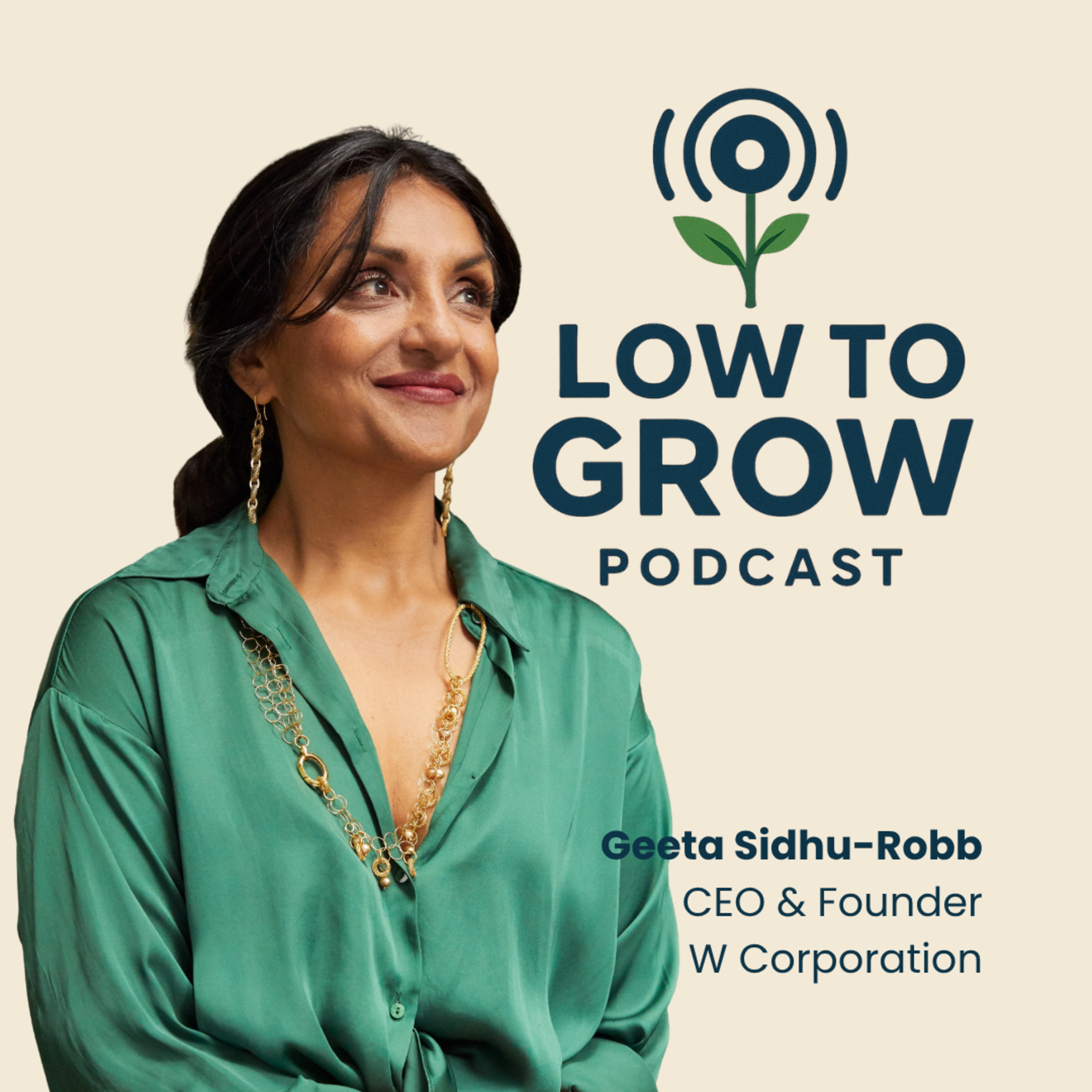
Geeta Sidhu-Robb
Founder · WCorp
Geeta Sidhu-Robb is a multi-award-winning entrepreneur, activist, and success coach. She has won the Entrepreneur & Businesswoman of the Year award five times, and in 2025 received Disruptor of the Year, Workplace Equity Advocacy, Startup Innovation of the Year, and Women's Brand Impact Award at the UN. She established WCorp in 2024 to certify companies creating safe, successful workplaces for women, and launched WCorp Green Flag 2025, a certification and capital model directing funding toward women-led businesses. Geeta transitioned from corporate law to entrepreneurship in 2008 through Nosh Detox, then entered coaching in 2014. She has coached women leaders at major financial institutions including Barclays, UBS, Fidelity, and Blackrock. She coached Sam Smith (finnCap CEO) from £15M to an IPO and £52M exit, and now coaches on SuperScalers, an elite founder-scaling program for high-growth women entrepreneurs. Her media experience includes appearances on numerous UK prime-time television programs and a Netflix show in 2024. As an activist, she chairs the Microloan Foundation WDB, supports Sarah's Trust, previously chaired Montessori Global, and led anti-Brexit efforts as Chair of Open Britain.
Continue listening
More episodes

2026-06-07
Eileen Wada Willett of East Asian Girl Gang: A Third Culture Take on Identity, Fashion and Community
Listen →
2026-05-24
Dhritiman Mitra Investment Banker and Political Strategist: Insights on Harnessing AI for India's Future
Listen →
2026-05-10