
From BlackRock to Brain Health VC, Caitlin Ner on Bipolar, Burnout, Neurotechnology
"It all happened after a suicide attempt where I was hospitalized and put on a psychiatric hold. It was after over a decade of suicidal ideation."
"If you avoid difficult conversations, you are allowing yourself to have short-term comfort over long-term dysregulation. If you address those difficult conversations now, you will be more regulated in the long-term."
"When you are building in healthcare, you are not mainly just seeking revenue, you are also providing the highest quality of care that you need. And so when I saw these controversies at Cerebral, it really gave me this outlook that there is opportunity, but as startups start to scale, we need to really prioritize quality of care."
"Know that with research you can find the best level of care that can be provided to you. There are so many ways to address your mental health, beyond just talk therapy, there are all these other treatments, clinical trials, academics that are navigating new spaces."
Caitlin Ner, director of operations at PsyMed Ventures, shares how a manic episode and psychiatric hospitalisation during the COVID pandemic triggered her pivot from BlackRock infrastructure investing to the mental health startup world, and what she looks for when investing in the next generation of neurotechnology and brain-health companies.
What you'll learn
- Bipolar one disorder can be misidentified as depression; antidepressant medication prescribed for a misdiagnosis can be ineffective or harmful, making specialist psychiatric assessment critical.
- Isolation combined with chronic overwork and inadequate sleep is a pattern that escalates mental health risk significantly, particularly for people with underlying conditions.
- Avoiding difficult conversations is not neutral, it trades short-term discomfort for long-term dysregulation and prevents the support systems around you from being able to help.
- Employer mental health benefits often go unknown to employees until a crisis forces them to find out; proactive communication at onboarding could change outcomes.
- Holistic mental health care means integrating community, therapy, physical movement, and diet rather than relying on a single point of intervention like medication.
- Neurotechnology using electrical stimulation to modulate parts of the brain offers new hope for treatment-resistant depression and attention disorders in people for whom all other options have failed.
- As a venture investor, moving quickly across many industries and reaching out to experts who are already deep in a space is a learnable and accelerated path to domain knowledge.
Key moments from the conversation
Four days of mania inside a multi-million dollar mansion
After nearly a year of pandemic isolation and escalating depression, Caitlin was invited to an entrepreneurial hackathon. The sudden shift into an energised, social, stimulating environment triggered a manic episode. She did not sleep for four consecutive nights, ran 15 miles a day, and messaged hundreds of people. The crash that followed ended in a suicide attempt and psychiatric hospitalisation.
Learning what bipolar one actually means
Caitlin had asked her doctor for antidepressants, not knowing she had bipolar one. The medication appropriate for depression is very different from what is needed for bipolar disorder. Her diagnosis, received after hospitalisation, reframed a decade of suicidal ideation and opened a path to appropriate clinical care.
From VC deal tables to youth teletherapy founder
Rather than resting immediately after BlackRock, Caitlin dove into researching a youth teletherapy startup, conducting interviews with teenagers, therapists, and insurers. When she eventually wound down the startup, the industry knowledge she had built led directly to a senior operations role at Cerebral, the fast-growing mental health unicorn.
The Cerebral lesson: scaling cannot eclipse patient care
At Cerebral, Caitlin witnessed what happens when venture-backed growth pressure outpaces clinical quality controls. The experience shaped her investment philosophy at PsyMed: that in mental health, the patient at the end of the line must remain the primary priority at every stage of growth.
Neurotechnology as the next frontier
PsyMed has invested in companies including Motif Neurotech, which uses a minimally invasive implant to modulate brain activity for treatment-resistant depression, and Neurode, which improves attention and offers live brain scanning for ADHD and focus-related conditions.
Frequently asked questions
What is PsyMed Ventures and what kinds of companies does it invest in?
PsyMed Ventures is a specialist fund investing at the pre-seed and seed stages in mental and brain health companies. Its portfolio spans biotech, medical devices, neurotechnology, care delivery, and infrastructure companies, anything changing the way mental and brain illness is treated.
What is bipolar one disorder?
Bipolar one is a mental illness characterised by manic episodes that can include severely elevated mood, drastically reduced need for sleep, impulsive behaviour, and psychosis. It is distinct from depression in its presentation and requires different medication. As Caitlin describes, it can be misdiagnosed as depression, delaying appropriate treatment.
What is neurotechnology in mental health and how does it work?
Neurotechnology uses electrical stimulation, implants, or external devices to modulate areas of the brain affected by mental illness. For treatment-resistant depression, for example, a minimally invasive implant can send electrical signals to quiet overactive neural circuits, offering a new modality for people for whom medication and therapy have both failed.
What modalities of therapy has Caitlin Ner explored?
She has tried cognitive behavioural therapy, acceptance and commitment therapy, EMDR (trauma-focused), brain spotting, and guided psychedelic experiences. She described how word-of-mouth referrals from others who had used less common modalities led her to explore each one.
What advice does Caitlin give to young professionals for mental health at work?
She advises learning what mental health resources your employer provides before a crisis arises, not avoiding difficult conversations, and building holistic health habits, including community, therapy, physical movement, and diet, rather than waiting until a single pressure point becomes unmanageable.
Who is Caitlin Ner?
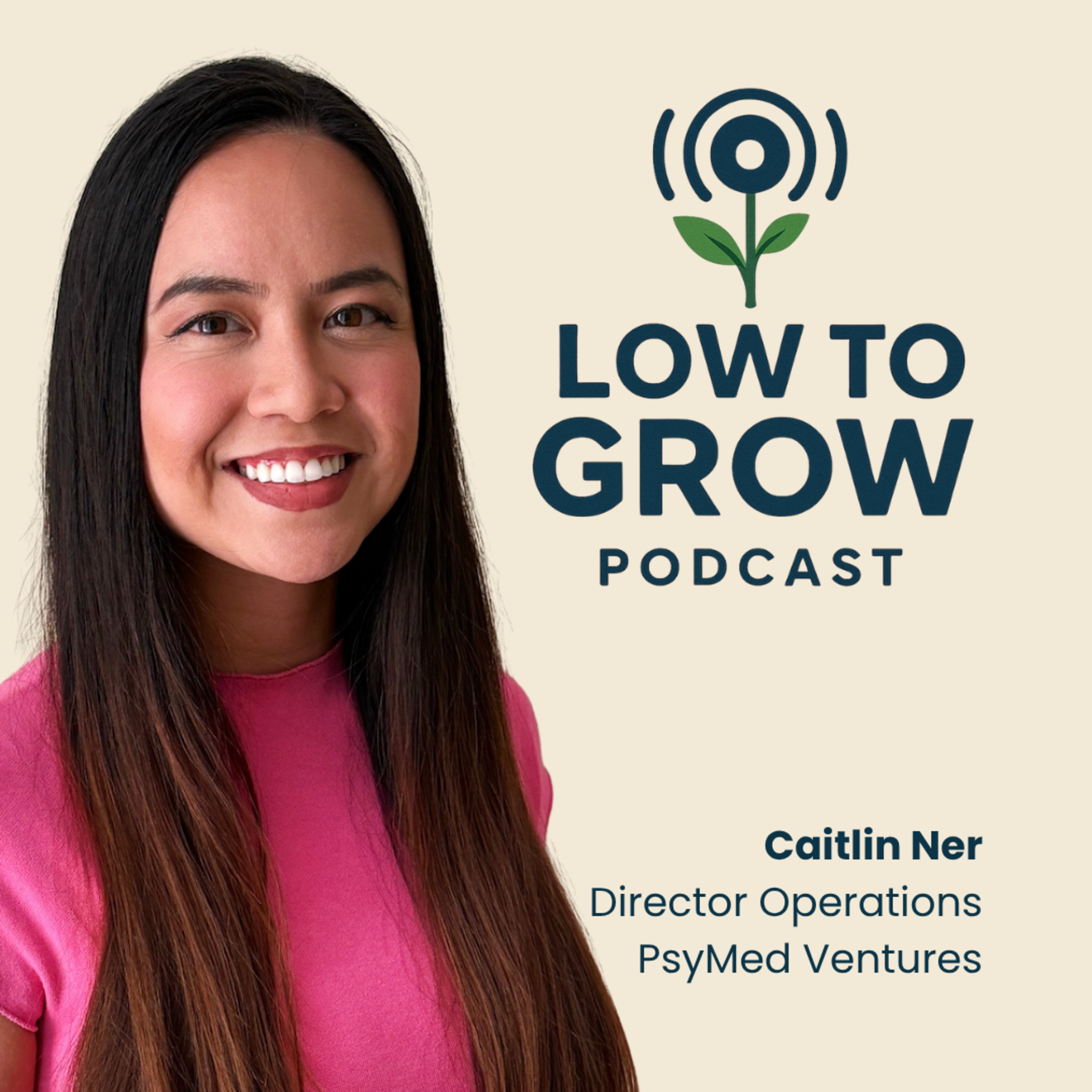
Caitlin Ner
Director of Operations · PsyMed Ventures
Caitlin Ner is Director of Operations at PsyMed Ventures, a VC fund investing in frontier mental and brain health technologies. Previously, she led growth and operations at a Series C mental health startup, Cerebral in the insurance team. She started her career as a global infrastructure investor at BlackRock. Caitlin studied Economics and Computer Science from Harvard University and is pursuing a Master's degree in Applied Neuroscience from Kings College London.
Continue listening
More episodes

2026-06-07
Eileen Wada Willett of East Asian Girl Gang: A Third Culture Take on Identity, Fashion and Community
Listen →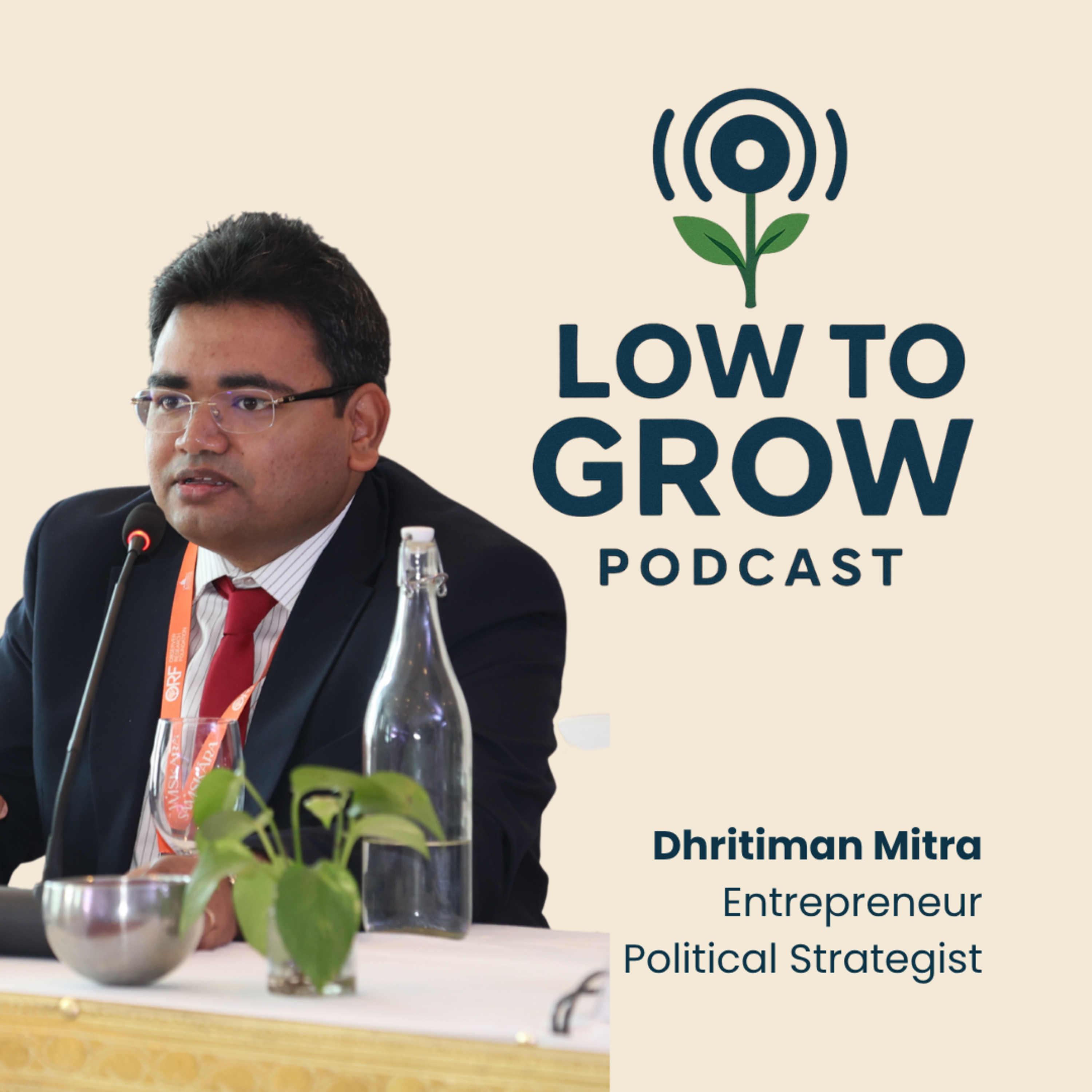
2026-05-24
Dhritiman Mitra Investment Banker and Political Strategist: Insights on Harnessing AI for India's Future
Listen →
2026-05-10